Boat trailers: rollers, bunks and Australian ramp launches
Rollers versus bunks is a hull and ramp decision. Spec the trailer for tidal concrete, slime and a solo launch — not for the showroom photo.
By Sam Keating · 21 October 2024 · Updated 15 January 2026 · 7 min read · 1,499 words
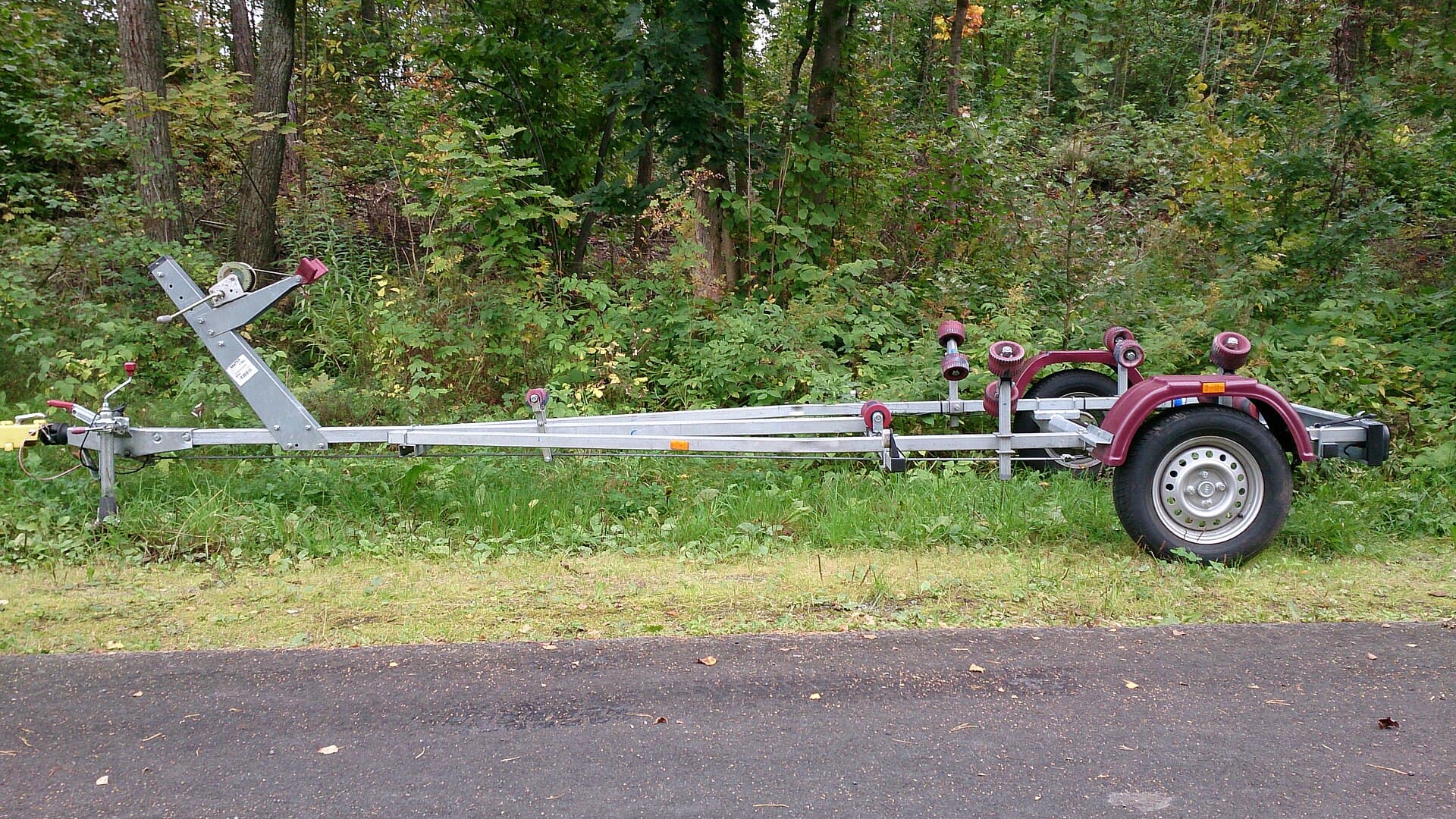
Five-fifteen on a falling tide at a Gold Coast ramp is where boat trailers tell the truth. The concrete is short, the slime is honest, and the bloke in front has a bunk trailer that needs another metre of water he no longer has. Behind him, a roller trailer walks the hull off in a depth that would leave the bunks high and dry. Rollers versus bunks is not a brand preference. It is a hull, a ramp and a solo-launch decision, and Australian ramps are unimpressed by a showroom photograph.
A boat trailer in this country lives in salt, silt and ultraviolet. Spec it as a launching machine that also happens to travel on the highway, or you will own a nice stand that is miserable at 5 a.m.
Australian ramps are not a lake in a catalogue
Tidal ramps on the east coast change depth while you queue. River ramps silt up. Alpine ramps in the high country are steep and short. Shire ramps in the west can be a slab with a drop-off. The trailer has to launch the boat you own on the worst ramp you actually use, not the best one you remember from a holiday.
That is why matching the trailer to the tow vehicle is only half the job. The other half is matching the support system to the hull and the ramp. A deep-vee fibreglass cruiser and a flat-bottomed tinny do not want the same bunks. A skeg on a four-stroke does not want the same keel roller as a jet boat.
State maritime pages are worth a look before you invent your own ramp etiquette. Queensland’s Maritime Safety Queensland material on boating and ramps is a public reference; local councils still set the concrete and the parking.
Rollers: the solo-launch argument
Rollers let the hull move. That is the point. On a shallow or falling-tide ramp you can stop with the guards just in the water, winch or idle the boat on, and leave without swimming the trailer up to the windows. For a 4.5 to 5.8-metre runabout launched by one person before work, that is not a luxury.
The cost is support. Too few rollers, or rollers set to a hull they were never measured for, put point loads into an alloy sheet or a fibreglass vee. Keel rollers that are too high lift the hull off the wobblers and leave the boat rocking on a spine. Wobblers that have flattened with age become bunks that do not know they are bunks.
Specify:
- A keel roller set that matches the actual keel, not a generic “5-metre” kit.
- Enough wobble rollers or pairs to share the hull, including aft where the motor hangs.
- A winch post that does not lean once the boat is on and the strap is tight.
- Guides that help you centre the hull in a cross-wind at the ramp, not just look sporty.
If you store the boat for months between trips, pure rollers can leave hull imprint and flat spots. That is where a mixed setup earns its keep.
Bunks: the support argument
Bunks are long carpets or polymers that spread the hull’s mass. They are kinder to many alloy boats, they hold a hull still in the yard, and they forgive a slightly casual winch if the bunks are set to the deadrise. They also need more water. On a short tidal ramp you will back in deeper, which means lights, brakes and bearings in the tide.
Carpeted timber bunks rot from the inside and hide the rot behind a staple. Plastic or composite bunks cost more and last. Either way, the bunks have to be set to your hull. A pair of straight bunks under a deep vee is two lines trying to be a cradle.
Field note: A Port Stephens tinny owner swapped a tired bunk trailer for a full-roller frame after a season of solo launches on a falling tide. The first long drive south put two dimples in the hull where a pair of rollers sat under a rib. He went back to a keel roller and two bunks, and the ramp still worked because the keel roller did the walking.
A mixed trailer — keel roller, aft wobble rollers, and bunks along the chines — is the Australian compromise that keeps showing up on well-used ramps. It is not indecision. It is an admission that you launch in half a metre and you store for six weeks.
Mass, motors and the plate people ignore
Boats gain weight in the first year. A four-stroke is heavier than the two-stroke the trailer was built for. A second battery, a full icebox, extra fuel bladders for a Fraser trip, and the spare prop in a crate all sit on the same ATM. Reading ATM, GTM and tare is not optional because the trailer is wet.
ATM has to cover boat plus motor plus fluids plus trailer tare. GTM tells you what the axles think of that. A single-axle trailer under a 5.8-metre fibreglass boat with a 150-horsepower four-stroke is how you discover axle ratings on the highway out of Taree.
| Boat style | Typical wet mass (hull + motor + fuel) | Trailer notes |
|---|---|---|
| 4.2–4.8 m tinny | 400–800 kg | Single axle, rollers or mixed; watch tare if you add alloy |
| 5.0–5.8 m runabout | 900–1,600 kg | Brakes almost certain; mixed support; check GCM |
| 6.0–6.8 m cabin | 1,600–2,400 kg | Tandem, electric brakes, breakaway, bunks or mixed |
| Ski / wake hull | 1,800 kg+ | Wide bunks, low winch, serious tow vehicle |
If the motor is about to be upgraded, spec the trailer for the next motor, not the current one. The cheapest trailer in the yard is priced for the boat in the photo, not the boat you will own in three years.
Salt, brakes and the things that live underwater
A boat trailer is the only common Australian trailer that is designed to go swimming. That changes bearings, brakes, lights and steel.
Bearings need a system you will actually maintain: a quality seal, a grease regime, and a habit of checking temperatures after the first highway run home. Wheel bearings, tyres and brakes is the service version of that sentence. At the ramp, a five-minute rinse of hubs, brakes and the plug beats a seized bearing on the Pacific.
Brakes over 750 kilograms ATM are required. Disc override setups are common on lighter boat trailers; electric drums or discs with a cab controller suit tandems. Whatever you choose has to be specified for immersion, then treated as if it will be immersed, because it will. Stainless lines, sealed magnets, and a breakaway you test before the season are the difference between a legal plate and a working trailer. When a trailer needs brakes covers the thresholds.
Lights should be LED, submersible, and mounted where a reversing ute and a concrete kerb cannot break them every second Saturday. The ADR lighting rules still apply in the tide.
Preventing rust on a boat trailer is not a polish job. Hot-dip galvanising after welding and drain holes that actually drain will do more than a hose with a hope. Aluminium frames earn their keep on coastal tinnies if fasteners are isolated. Galvanising versus powder coat is the finish argument; salt water is the judge.
Winches, guides and the launch you can repeat
Spec a winch rated above the wet boat, a strap you will replace on a date, and a bow stop that meets the hull where the hull is strong. Side guides let you launch in a cross-wind without a second pair of hands. Drive-on setups still need a winch for the day the tide is wrong. Check tyre pressures before the trip, not in the ramp queue; a trailer that lives loaded wants a tyre rated for that mass.
Buying, building and the boat you already own
Measure beam, deadrise, keel and transom, then take those numbers to a builder who will set rollers or bunks to the hull. Questions for trailer manufacturers should include axle position relative to the motor and how they treat welds before galvanising. A used package can hide a trailer built for the previous motor — new versus used still applies when the hull is what you came for. If you tow to remote ramps, treat the loom as outback wiring.
Next step
Walk the worst ramp you actually use, at the tide you actually launch, and decide whether the hull needs to roll or to sit. Then weigh the boat wet and take both answers to a builder. If you want the legal and mass frame around that conversation, start with ADR trailer compliance in Australia and do not buy a first trailer that cannot launch on the ramp you already know.
Questions readers ask
- Are rollers or bunks better for Australian boat ramps?
- Rollers help a solo launch on a short, shallow or tidal ramp because the hull can roll on and off with less water over the guards. Bunks spread load and suit boats that sit for months, and they are kinder to many alloy hulls if the bunks are set correctly. Many Australian trailers mix a keel roller with bunks so you can launch without giving up support.
- Do boat trailer brakes survive salt water?
- They survive if you specify them for immersion and then flush them. Stainless or well-sealed electric-brake assemblies, a rinse at the ramp, and a bearing service after a salt season matter more than the brochure word “marine”. Override discs that sit in the tide every weekend will teach you otherwise.
- How do I know the trailer matches the boat’s mass?
- Use the boat’s actual wet mass — hull, motor, fuel, batteries, iceboxes and the spare prop — then add the trailer tare. The ATM on the plate has to cover that total. A 4.8-metre runabout that “weighs a tonne” on the sales floor can be 1,400 kilograms once the four-stroke and a full tank are on it.
- Should a boat trailer be galvanised or aluminium?
- Hot-dip galvanising is still the workhorse for steel boat trailers in Australia if welds are done before the bath. Aluminium frames save tare and like coastal life, provided the builder isolates fasteners. Powder coat over raw steel at a salt ramp is a short story.