Camper trailers: hard-floor versus soft-floor
Hard-floor versus soft-floor is a setup-time, dust and ATM decision. Spec the camper for corrugations and a real licence class — not for the kitchen in the photo.
By Riley Hart · 14 June 2025 · Updated 20 April 2026 · 6 min read · 1,365 words
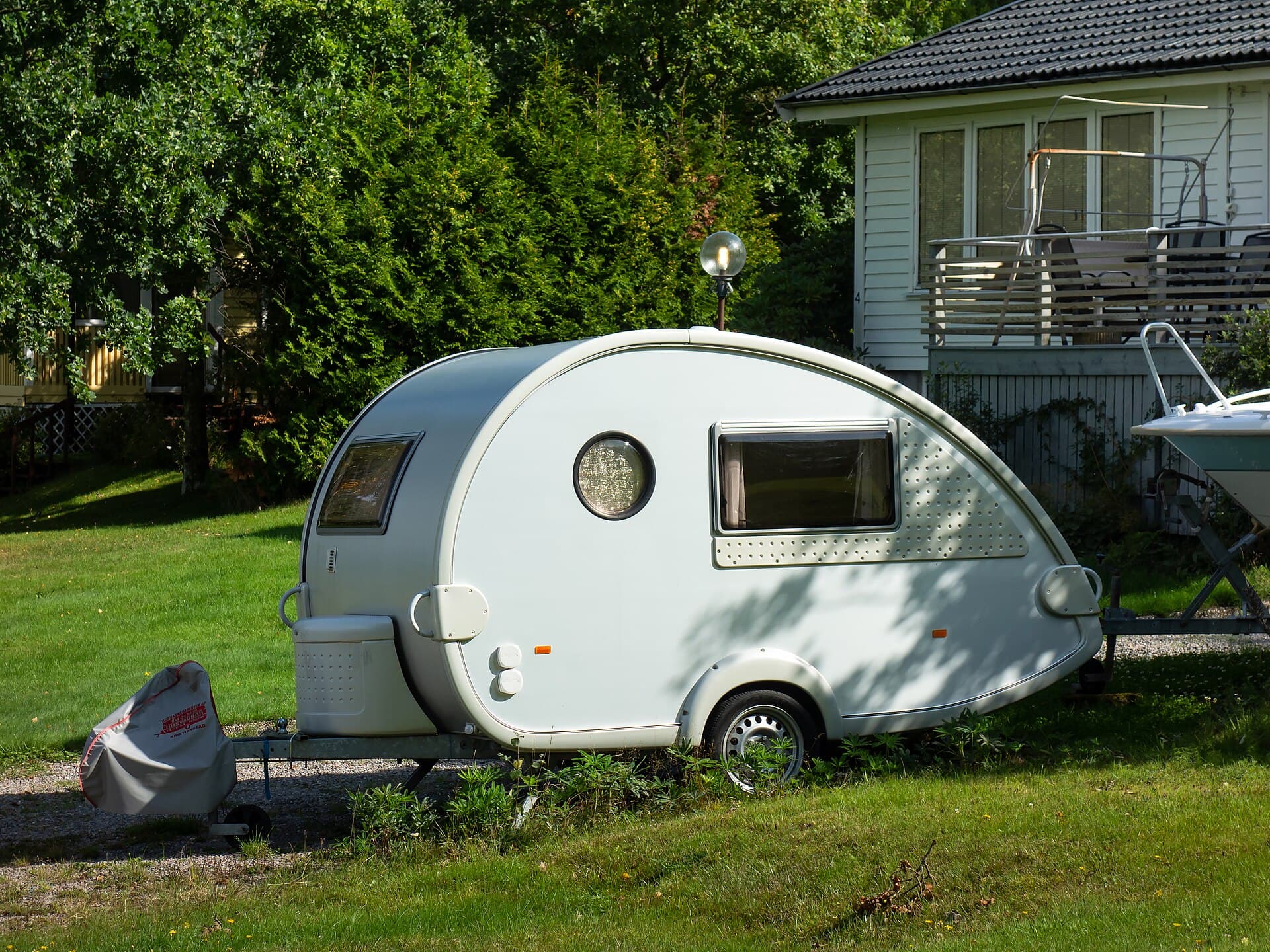
The corrugations west of Halls Creek do not care what the kitchen looked like on Instagram. They care what the trailer weighs, how the bushes are, and whether you can still put a bed up at 4 p.m. after 400 kilometres of washboard. Hard-floor versus soft-floor is the great Australian camper argument. The useful thesis is narrower. One is a tent that lives on a trailer. The other is a folding room. Choose for setup minutes, wet ground and ATM — not for a slide-out that photographs well in a car park.
A camper trailer in this country is a touring machine that will see dust, UV and a boat ramp used as a camp. Spec it as a trailer first. The canvas is the second conversation.
Two layouts, two ways of making camp
A soft-floor camper is a box or a frame with a tent that stretches onto the ground. You sleep, cook and live partly on dirt, matting or a tropical floor. Setup is poles, canvas and patience. Pack-down is a race against dew. The reward is tare. A well-built soft-floor can leave payload for water, fuel and food on a ute that is already wearing a steel bumper and a second spare.
A hard-floor camper unfolds or lifts so the mattress sits on a platform. Many Australian hard-floors are a flat box that opens 180 degrees; others are a rising roof over a fixed floor. You are off the dirt, out of most of the puddle, and inside a space that can be weather-tight in minutes once you know the drill. The cost is mass, height on the highway, and a mechanism that must still work after a season of dust.
Neither layout is “more off-road”. Off-road is chassis, clearance, suspension travel, tyre, and whether you packed inside ATM. A soft-floor on a lazy beam axle is not a bush machine because the tent is canvas. A hard-floor on worn bushes is not a desert machine because the lid is plywood.
What actually changes on an Australian trip
Setup time decides mood. After a late run into a Cape York creek camp, a hard-floor that is a bed in ten minutes is a different marriage to a soft-floor that wants forty minutes and a calm wind. If you move every day, that gap compounds. If you set up for a week at the same inlet, the soft-floor’s extra minutes disappear and the saved tare starts to look like extra water.
Wet ground and ants decide comfort. A soft-floor on a boggy south-west paddock in August is a tropical floor and a mop. A hard-floor in the same paddock is still a step up. In the dry, both are fine.
Dust decides canvas life. Corrugations and bulldust will find every zip. Quality canvas, covers that actually fit, and a pack-down that is dry enough to avoid mildew matter more than the brand patch. Hard-floor seals fail too; a dusty hinge is a dusty bed.
Field note: A couple touring the Strzelecki in a tidy hard-floor added 80 litres of water, a second fridge “for the kids’ drinks”, and a timber box of recovery gear on the A-frame. The first decent corrugations walked the fridge off its slides. The public weighbridge at Lyndhurst later put them 140 kilograms over ATM. They kept the water, ditched the drinks fridge, and the lid latches survived the rest of the loop.
ATM is the touring limit, not the brochure category
Camper brochures talk about “off-road rating” and “family layout”. The plate talks about ATM, GTM and tare. Reading those numbers is how you stay legal when the tanks are full.
Water is 1 kilogram a litre. Eighty litres is 80 kilograms, plus the tanks. Fuel jerry cans, a full pantry, recovery boards, and the “small” bag of tools will find the last 100 kilograms you thought you had. Soft-floor tare helps here. Hard-floor tare spends it. Either way, payload is ATM minus tare, and touring payload is what is left after the kitchen you already bolted on.
| Layout | Typical tare (touring spec) | Honest ATM band | Lives best when |
|---|---|---|---|
| Soft-floor, compact | 400–700 kg | 750–1,400 kg | You move often, pack light, and accept setup time |
| Soft-floor, family | 700–1,100 kg | 1,400–2,000 kg | Week-long camps, kids, more canvas |
| Hard-floor, couple | 800–1,200 kg | 1,400–2,000 kg | Daily moves, wet camps, faster nights |
| Hard-floor, family | 1,100–1,600 kg | 2,000–2,700 kg | A ute with real GCM and electric brakes |
Match the camper to the tow vehicle with GCM after you have loaded the ute as you will travel — steel bar, dual battery, roof rack, fridges on the tray. A 3,500-kilogram tow rating is not a 3,500-kilogram touring budget. Weight-distribution hitches and sway become a conversation on long wheelbase wagons and on campers that sit tail-heavy once the kitchen and jerry cans are aft.
Brakes arrive as soon as ATM is over 750 kilograms, which is most touring campers that are useful. Electric brakes and a controller you practise with are the usual spec. Over 2,000 kilograms ATM, fit and test the breakaway. When a trailer needs brakes is the rule version. State towing pages such as Queensland’s towing rules are a public refresher before a long state-border run.
Chassis, floor and the corrugation test
The chassis — C-channel, RHS and drawbar — is the part that keeps a hard-floor lid aligned and a soft-floor box off the stones. Independent trailing-arm suspension is common on Australian off-road campers because it tracks corrugations better than a tired beam. It still needs bushes and shocks that someone will service. A beam axle is not immoral on a coastal soft-floor that sees bitumen and a grassy site. It is a poor choice as the only spec on a Simpson-desert brochure.
Steel versus aluminium shows up on camper bodies as builders chase tare. Steel frames take abuse and a weld-on recovery point. Aluminium bodies save mass and like coastal air if fasteners are isolated. Galvanising versus powder coat on the chassis is a rust conversation; corrugations will chip powder coat into a map of the last track.
Hard-floor platforms are plywood, composite or alloy. Soft-floor living happens on canvas and matting; the trailer floor under the tent still needs to be a real floor if tanks and a kitchen sit on it. Wheel bearings, tyres and brakes belong on a pre-trip list, not after a hot hub on the Plenty Highway.
Kitchens, water and the mass that hides in convenience
A slide-out kitchen with steel drawers will weigh more than the brochure’s lifestyle paragraph. Soft-floors often carry it on the tailgate; hard-floors hide it in the box. Both need the mass listed. Put water where it helps coupling mass, gas in a vented holder, and treat the loom as wiring for the outback if a failed lamp is a night on the verge. Preventing rust still applies under the kitchen and on every stone-chip in the A-frame.
Buying the category, or specifying the trip
If you camp four weekends a year on mown grass, a simple camper is enough. If you do the Gibb or the Cape, buy the chassis and the ATM, then pick the floor type that matches how often you move. New versus used is sharp because canvas, seals and bushes hide age. Questions for manufacturers should include published tare — empty, or “standard touring”? — and budget the build as a system. The types hub is the map; specifying a custom trailer for Australian conditions is the corrugation checklist under both floor styles.
Next step
Write down how many nights you move camp, how much water you actually drink, and the GCM left on the ute after bull bar and fridges. Then choose hard-floor or soft-floor against those three numbers. When you are ready to put that on a plate, start with matching a trailer to your tow vehicle and do not pay a deposit until the ATM still works with the tanks full.
Questions readers ask
- What is the real difference between hard-floor and soft-floor campers?
- A soft-floor camper is a trailer with a tent that comes off onto the ground. A hard-floor lifts or unfolds so you sleep on a platform above the dirt. Soft-floors are usually lighter and cheaper. Hard-floors are faster to make weather-tight and keep you off wet ground. Both still have an ATM, and both will eat a ute’s GCM if you fill the water tanks and the fridge.
- Which is better on corrugations?
- The chassis, suspension and packing matter more than the floor type. A heavy hard-floor with tired bushes will shake itself apart on the Tanami just as quickly as a soft-floor with a bent pole bag. Independent suspension, decent bushes, and not exceeding ATM are the corrugation spec. The floor type then decides how you live at camp.
- Do I need a bigger licence for a loaded camper trailer?
- Many touring combinations stay on a class C licence if the tow vehicle’s GVM and the trailer ATM still fit the class and the GCM. Load water, fuel and a rooftop tent on the ute as well and some dual-cabs wander toward uncomfortable GCM numbers. Check plates and your state licensing page before a Cape trip, not at a roadhouse.
- Is a hard-floor always heavier?
- Usually, because you are towing a folding room. There are light hard-floors and porky soft-floors with steel kitchens and 150 litres of water. Compare tare and ATM on the plate, not the category name. A 1,600-kilogram ATM soft-floor with full tanks can outweigh an empty-looking hard-floor that someone forgot to fill.