Hot-dip galvanising versus powder coat for trailers
Zinc is sacrificial, powder is a barrier. Australian trailers fail when those jobs are confused, when boxed steel cannot drain, and when a pretty coat hides mill scale.
By Sam Keating · 25 August 2025 · Updated 16 February 2026 · 7 min read · 1,475 words
Cairns, the week the wet season breaks. A powder-coated tandem that looked showroom-clean in September is sitting behind a shed with blisters along the lower rail, brown at every stone chip, and a smell of trapped water when you tap the boxed drawbar. The owner washed it after the last job, or meant to. The coat did what a barrier does when you scratch it and then offer it a tropical wet: it hid the rust until the rust had a head start.
Hot-dip galvanising and powder coat are not rival paint colours. They are different jobs. Zinc, applied properly, is sacrificial. It will wear itself down protecting steel. Powder is a barrier. It keeps water and air off the steel until the barrier is broken. Australian trailers spend their lives breaking barriers — boat ramps, corrugations, cattle yards, fertiliser, a shovel dropped on a rail. If you specify a finish as if it were a colour chart, you will buy the Cairns story.
This sits in the builds hub next to metal choice. Read steel versus aluminium if you have not yet decided what you are coating. There is no powder coat that makes a dirt-trapping design honest.
What hot-dip actually does
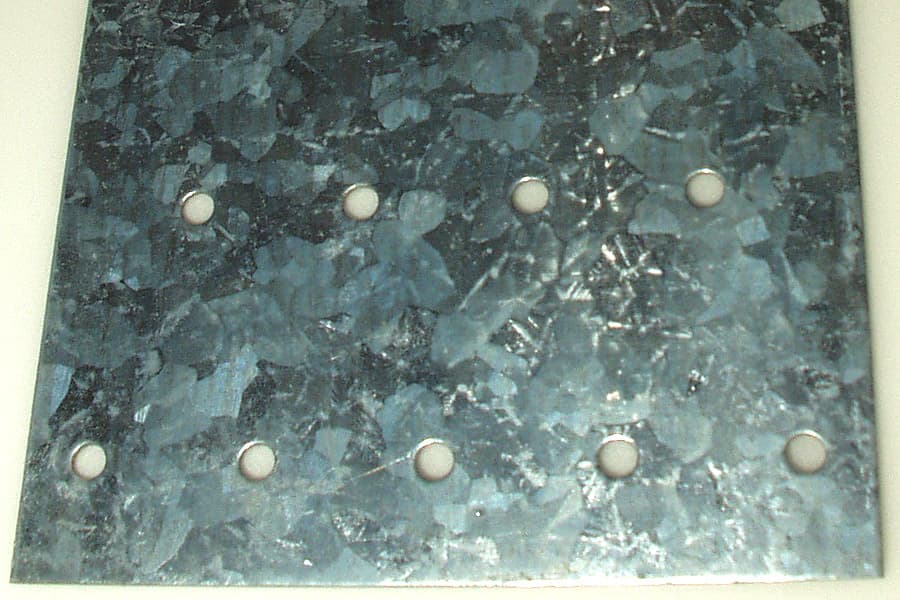
The trailer is cleaned, pickled, fluxed, and lowered into molten zinc. The zinc alloys with the steel. You get a coating that covers inside and out — if, and only if, the fabricator left a path for the zinc to get in and the air to get out. Closed RHS with no vents becomes a pressure vessel in the bath, or a rust pocket that the zinc never saw.
That is why galvanising is a design decision, not a last-minute upgrade. Drain holes, vent holes, and the way gussets are welded decide whether the dip is a coating or a lottery. A C-channel is easier to do well. An RHS frame can be done well. An RHS frame designed like a piece of furniture will come back looking silver and still rot from the inside.
After the bath:
- Threads need chasing. Coupling nuts, U-bolts, jockey-wheel stems.
- Holes fill. Specify which holes must stay clear.
- Distortion happens. Long, thin drawbars can move. A shop that galvanises often has already allowed for it.
- Appearance varies. Spangle is not a quality grade. Bare patches and heavy dags are.
Zinc is not permanent. It is a thickness and a wear rate. Coastal splash and a cattle-yard hose-down consume it faster than a shed in Wagga. You maintain galvanising by washing, by not grinding it off for a pretty weld repair without touching up, and by noticing when the dull grey has gone to brown at a stone rash.
Field note from Cairns: the galvanised trailers that last through the wet are the ugly ones with extra holes. Someone thought about the bath. The sealed, pretty A-frames are the ones we drill in the car park five years too late.
What powder coat actually does
Powder is electrostatically applied and baked. It can look superb. It can cover a multitude of sins if the steel underneath was not cleaned. Mill scale, weld spatter and oil become a blister factory. A good powder job is mostly preparation — strip, blast or grind, clean, then coat. A cheap powder job is a colour on mill scale.
As a barrier, powder fails at chips. Trailer life is chips. That does not make powder useless. It makes it a poor single defence for a dunked chassis, and a reasonable defence for a suburban box trailer that lives under a carport and sees a kerb, not a ramp.
Powder also hides inspection. A galvanised rail shows brown when the zinc is gone. A powder-coated rail can look intact while the web is thin. If you buy used, a fresh powder coat is a reason to slow down, not a reason to pay more. That suspicion belongs in the used trailer checklist.
Touch-up is possible and often neglected. A small bottle of a compatible paint and a wire brush in the toolbox is part of a powder system. Without it, you have a magazine finish and a two-year coastal life.
Duplex systems, and the way they go wrong
Powder over galvanising — a duplex system — is a legitimate Australian specification when someone prepares the zinc for the powder. The barrier slows the wear of the zinc. The zinc protects the scratches in the barrier. You see this on trailers whose owners want the silver-and-colour look and the coastal life.
It goes wrong when:
- The zinc is coated too soon, or without the right prep, and the powder lets go in sheets.
- The design still holds water, so the failure is inside a rail you cannot see.
- Edges are thin and the first fork-tyne strike takes both layers off.
- Someone welds after the fact and leaves black steel in a pretty frame.
If a builder offers duplex as a tick box without talking about prep, they are selling a look. Ask the same process questions you would on a factory walk — questions for manufacturers exist for this line item as much as for ATM.
| Finish | Strength | Weakness | Australian fit |
|---|---|---|---|
| Hot-dip only | Sacrificial, covers inside if vented | Appearance, threads, not pretty after ten years | Boat chassis, farm, anything hosed or dunked |
| Powder only | Looks finished, colour, decent if prepped | Chips, hides rust, poor dunked life | Suburban box, enclosed lids, guards |
| Duplex | Barrier plus sacrifice | Cost, prep, still needs drainage | Coastal trailers whose owners will maintain them |
| Paint over black steel | Cheap, repairable with a brush | Short life in salt and fertiliser | True farm hacks you expect to maintain |
Design details that matter more than the catalogue finish
Drain and vent. If you remember one instruction for the fabricator, remember this. Hole the boxed sections. Hole the drawbar. Hole the parts that look too tidy to hole. Galvanisers can refuse a job that will explode in the bath. Believe them.
Weld quality before the bath. Slag and silicon-heavy welds do not take zinc evenly. The brown line along a weld in year two is often year-zero fabrication.
Fasteners. Galvanised or stainless, with a plan. Mixed fasteners on a coastal trailer become a display of galvanic couples. Aluminium decks on galvanised rails need isolation, or the bolt holes become the maintenance.
Electrical earths. Do not earth through a powder coat and a sharp screw and call it a circuit. Scrape a designed earth point, or use a dedicated tab the dip can take. The outback wiring habits apply on the coast too.
Floor interface. A sealed chequer floor on a powder-coated rail holds wet dirt against the coating. Floors are a finish decision. See trailer flooring.
Maintenance after the pretty day
Galvanised: wash salt and fertiliser off. Do not store with the plug in and the bung in. Watch stone rash on the leading faces and the last 300 mm of the chassis. A zinc-rich paint exists for repairs. Use it after a weld.
Powder: chip-inspect after the first dirt road and after every ramp. Touch up. Do not high-pressure the edges into peeling. If water is sitting on a rail, drill a hole and stop arguing with the climate.
Both: keep the 7-pin or 12-pin out of the wet, pack bearings after dunks, and do not treat mudguards as sacrificial without noticing that the rail behind them is also being sandblasted.
State agencies do not care whether you chose silver or black. They care that the trailer still has lights, brakes and a readable plate. Finish is how you keep the structure that those rules assume. The ADR pages and Queensland TMR will not specify your coating. Your climate will.
How to write it on the brief
Do not write "galvanised or powder, whatever is cheaper." Write the climate, the wash habit, and whether the trailer will be dunked. Then write one of:
- Hot-dip galvanise, fabricator responsible for vents, drains and thread chasing.
- Powder, blast or equivalent prep, chip-repair kit on handover.
- Duplex, named prep standard, still drained as if it were galvanised only.
Price the calendar. A dip adds transport and days. That is a budget line in budgeting a custom build, not a surprise in week six.
Next step: crawl a two-year-old trailer from the same shop, not the display unit, and look at welds, holes and chips. If you cannot find one, ask why. Then put the finish sentence on the brief before anyone talks colour. For how we credit images and process photos on this site, see credits.
Questions readers ask
- Can I powder coat over galvanising on a trailer?
- Yes, as a duplex system, if the zinc is prepared for the powder and the design still drains. Done well, the barrier and the sacrificial layer help each other. Done badly — powder over raw zinc without prep, or powder over a boxed section that holds water — you get blistering that hides rust until a spring hanger lets go.
- Why do some galvanised trailers rust at the welds first?
- Welds that were not cleaned, silicon-rich welds that the zinc did not wet, or sections that trap pickle and rinse water will show brown early. That is a fabrication problem as much as a dip problem. Ask who grinds, who vents, and who inspects after the bath.
- Is powder coat enough for a coastal boat trailer?
- Rarely on its own. Boat ramps scratch barriers. Salt water sits in the scratch. Powder can still make sense on panels, mudguards and lids that you can touch up, but the chassis that gets dunked wants zinc or a duplex system and a wash habit.
- What should I do to threads after a hot dip?
- Budget time to chase coupling threads, U-bolt holes and any nut that must still turn. Zinc in a 50 mm coupling thread is a classic pickup-day surprise. A builder who owns the relationship with the galvaniser will already have this on the job card.