New versus used custom trailers: a buyer's checklist
A used custom trailer can be the honest buy if you inspect compliance, fatigue and rust, not just the paint. Here is the yard checklist we use across Australia.
By Morgan Blake · 6 May 2024 · Updated 20 November 2024 · 7 min read · 1,541 words
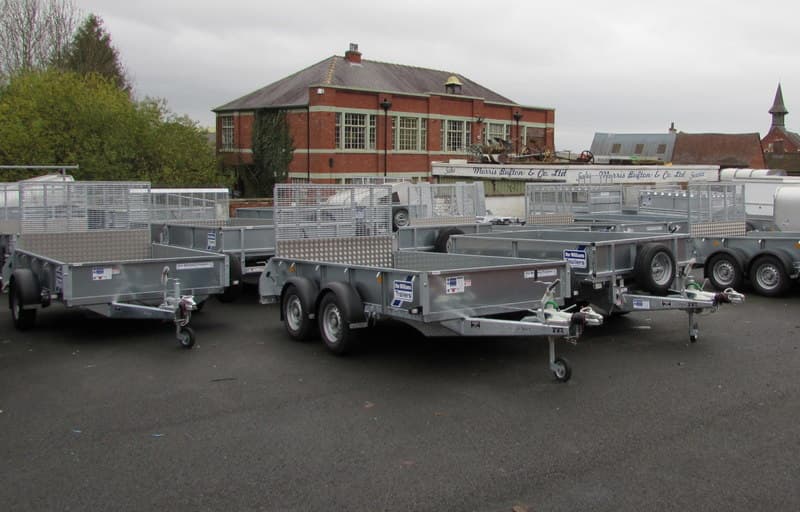
A Saturday in a Brisbane tradie yard, late morning, the kind of heat that makes the chequer plate too hot to sit on. The trailer for sale is an 8x5 tandem with a lockable lid, two ramps, and a story about "one owner, hardly used." The paint is recent. The 50 mm coupling is not. The 7-pin plug has been replaced with a hardware-store fitting whose earth pin is already loose. Under the mudguard, the chassis rail has a neat patch over what used to be a rust hole. The seller wants new-trailer money minus a bit for the kilometres.
Used custom trailers are not the enemy. Plenty of Australian workshops built honest gear in the 2000s that will still outlast a cheap new import. The mistake is inspecting a used trailer as if it were a used ute — kick the tyres, look at the paint, argue the price. A trailer hides its failures in the plate, the drawbar throat, the brake magnets and the sections you cannot see without a torch and a creeper.
This checklist is for buyers who already know what they need. If you have not written the duty cycle down, stop and specify the trailer for Australian conditions first. Buying used without a brief is how you inherit someone else's ATM.
Decide what used is allowed to be
A used trailer is rational when three things are true at once:
- The ATM and tare leave you a payload you will actually use.
- The structure is inspectable, and the rust you can see is the rust that exists.
- The remaining work — tyres, bearings, brakes, plug, lights, registration — still leaves the number below a comparable new build.
That third point is where private sales fall apart. A "$4,500 near-new 8x5" that needs two axles, a coupling, a floor and a trip to an engineer is not cheaper than a new one from a local shop. It is a project with a registration problem.
New is the better buy when you need a plate that matches a specific ATM, a finish for coastal salt, or a deck that does not yet exist in the used market. Custom means the used stock is thin. You will not find last year's exact drawbar height and ramp angle sitting on Facebook.
Field note from a Brisbane yard: if the seller will not let you put it on a weighbridge, walk away. The scale is cheaper than a year of guessing payload.
Compliance archaeology comes before cosmetics
Start at the identification plate, not the toolbox. You want a readable manufacturer, a vehicle identifier if one was issued, ATM, GTM, tare, tyre and rim sizes, and axle ratings that add up. If those numbers are missing, painted over, or obviously restickered, you are not buying a trailer. You are buying a negotiation with a state road agency.
Reading an Australian trailer plate is the skill that stops the rest of this checklist being theatre. Payload is ATM minus tare. If the tare on the plate is 420 kg and the trailer now has a chequer-plate floor, a generator box and steel ramps, the real tare has moved. The plate has not. You can be legal on paper and overloaded in the real world the first time you put a mower on it.
Check the coupling stamp against ATM. A 50 mm ball coupling is common up to 3,500 kg, but only if the coupling, the ball and the towbar agree. Safety chains and their attachment points should look like they were designed, not like a flat bar tacked on after a failed roadworthy. Lighting should be ADR-sensible — not a string of aftermarket LEDs stapled to a rusted rail with scotchloks.
State agencies treat trailers as vehicles. Queensland TMR vehicle standards and the Australian Design Rules are the background, even when the seller says it has "always been right for the farm." Farm use is not a compliance category that follows you onto the Cunningham Highway.
Fatigue and rust hide in the same places
Crawl it. Take a torch, a screwdriver, and a plastic scraper. You are looking for movement, not shine.
Drawbar throat and A-frame junctions. This is where corrugations concentrate stress. Hairline cracks in paint are a clue. Cracks in welds are a decision. A neatly painted-over repair without a story is a no.
Spring hangers and shackle bushes. Elongated holes and collapsed bushes mean the axle has been walking. On a tandem, look for one side sitting lower. That is not character. That is a bent axle or a tired pack.
Crossmembers under the floor. Lift a board or drop a camera through a drain hole. Boxed RHS that holds water will rust from the inside and still look fine from the yard. C-channel at least lets you see the web.
Mudguard lips, tail, and the last 300 mm of the chassis. Stone rash and salt sit here. Surface rust you can convert and paint is different from scale you can push a screwdriver through.
Floor fasteners. Steel screws into timber that has been wet for a decade will let go on the day you load a pallet. Aluminium chequer over a steel frame needs isolation. If you see white powder and brown rust in the same bolt hole, the galvanic couple has been working for years.
Do not confuse a recent powder coat with a healthy chassis. Paint is a barrier. It hides as well as it protects. The galvanising versus powder coat argument is relevant here: a used trailer that was hot-dip galvanised and then neglected will often still have zinc left. A used trailer that was painted over mill scale will not.
Running gear is where used trailers earn or lose the money
Budget a running-gear reset on every used trailer unless the seller has receipts you believe.
- Tyres. Date codes, load index, and cracks in the sidewall. A trailer tyre can look fat and still be eight years old. Trailer tyres age on the sunny side of a shed.
- Bearings and seals. Spin the drum. Grit, rumble, or blueing on the hub means a trip to a workshop before the first highway run. Boat trailers that have been dunked need extra suspicion.
- Brakes. Pull a drum if you can. Over-run couplings hide seized cables and worn shoes. Electric brakes hide worn magnets and a plug that never carried the circuit. A trailer over the ATM threshold without a working breakaway is not a bargain.
- Lights and loom. Wiggle the 7-pin or 12-pin at the plug and at every junction. Corrugations eat looms at the drawbar clamp and where the cable crosses a frame edge. Green pins are a chemical fact, not a cleaning job you do with a rag.
If the trailer will live on dirt after you buy it, price the wiring as if you were building a loom for the outback. You will do that work anyway.
Paper, weighbridge, and the walk-away list
Ask for:
- Original build sheet or invoice, even a faded one.
- Registration history in the current state, and a straight answer if it was transferred across a border.
- Receipts for axles, coupling, or a re-floor.
- A weighbridge docket dated this month, unladen, with the jockey wheel up and the coupling on a stand so you are not arguing about method.
Then write a walk-away list before you arrive, so the shiny toolbox does not talk you out of it:
- No plate, or a plate that cannot be reconciled with what you are looking at.
- Cracked drawbar or spring hanger, unless you are buying a chassis to cut up and you have said that out loud.
- Fresh paint over scale, especially inside boxed sections.
- Brakes that do not match ATM.
- A seller who will not weigh it, will not let you crawl it, or wants cash only with the plates already off.
Used enclosed trailers deserve a slower look than open trays. Water sits in the walls, the roof bows, and the floor rots where you cannot see it. Take a moisture meter if you have one. Smell the interior. A sweet, closed-up smell after a Queensland summer is rarely "it just needs a air."
A simple way to choose
Put both options on one line.
New when the brief is specific, the climate is hard, or you need a plate and a warranty you can hold a builder to. Use questions for trailer manufacturers so the quote is for the trailer you specified.
Used when the chassis is visible, the numbers add up, and you have priced the reset. Pay a local workshop for an hour of inspection if the trailer is more than a cheap 6x4. That hour is cheaper than a failed roadworthy.
If you want the wider buying frame — types, regulations, and what a deposit should lock in — start at the buying hub and keep this checklist in the glovebox. Next step: pick one used candidate this week, book a weighbridge, and refuse to talk price until the trailer has been on the scale and on its side in your head.
Questions readers ask
- When is a used custom trailer the better buy?
- When the chassis, plate and running gear match your duty cycle, the rust is surface rust you can treat, and the price still leaves room for new tyres, bearings, a plug and a weighbridge ticket. Used wins on simple, well-built trailers with a readable history. It loses on anything you cannot inspect or cannot register in your state.
- Can I re-plate a used trailer if the identification plate is missing?
- Sometimes, but it is not a Saturday job. You will need evidence of origin, measurements, and a path through your state road agency or an approved engineer. Budget time and money before you fall in love with an unplated bargain. A trailer you cannot identify is a trailer you may not be able to register.
- What is the one inspection most buyers skip?
- Weighing it. A used trailer advertised at 750 kg ATM with a chequer-plate floor, toolbox and ramps is often already close to that figure empty. If you do not know tare, you do not know payload. Pay for a public weighbridge before you pay the seller.
- Are imported second-hand trailers a problem in Australia?
- They can be. Lighting, couplings, brakes and identification may not meet the Australian Design Rules that local builders work to. Treat a private import as a project, not a ready-to-register trailer, until a competent person has checked it against current ADR and state requirements.