ADR trailer compliance in Australia
Australian Design Rules decide whether a custom trailer can be plated, entered on the RAV and registered. Here is how ADR 38, ADR 13 and ADR 62 actually show up in the workshop.
By Riley Hart · 16 January 2024 · Updated 11 June 2025 · 7 min read · 1,466 words
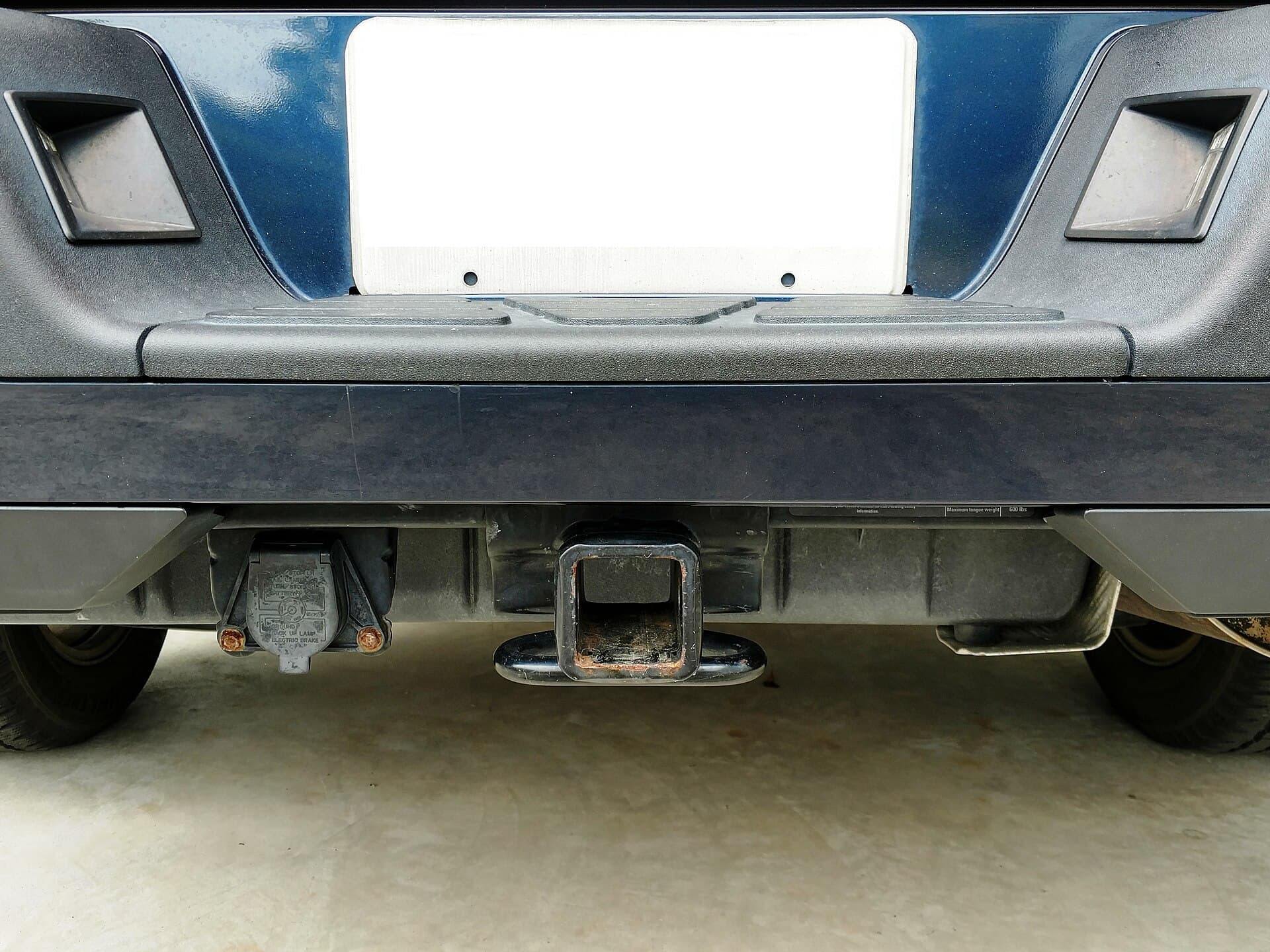
The Hume Highway south of Gundagai is a useful place to think about trailer law. Combinations roll past at 100 km/h with box trailers, plant tags, horse floats and hard-floor campers, and every one of them is supposed to carry the same three stories on a riveted plate: what it weighs empty, what it is allowed to weigh full, and who will stand behind those numbers. Australian Design Rules are how those stories get written. They are not a sticker you buy after the last weld.
This is an independent workshop reading of how ADR compliance actually works for custom trailers at or below 4.5 tonnes aggregate trailer mass (ATM). It is not legal advice. Confirm the current text of the ADRs, Vehicle Standards Bulletin 1 and your state registration process before you cut steel or book an inspection.
Compliance is a design job, not a finishing job
A custom trailer fails ADR work in the first week more often than in the last. Drawbar length, axle placement, coupling height, lamp positions and brake type are locked in once the chassis is tacked. Changing them after powder coat is expensive; changing them after a failed blue slip is humiliating.
The useful question in the workshop is not “which ADR number do I write on the plate?” It is “which rule set am I building under, and which approval pathway will put this trailer on the Register of Approved Vehicles?” From 1 July 2023, first registration in Australia generally requires a RAV entry. Builders who make up to four trailers in a twelve-month period can use a concessional RAV pathway. Volume manufacturers use type approval. Either way, the trailer has to meet the national road vehicle standards before a state counter will talk about plates and CTP.
Read the plate language before you quote a payload. ATM is the maximum laden mass of the trailer, including the download on the coupling. Gross trailer mass (GTM) is the share of that mass that sits on the trailer’s own tyres when it is coupled. Tare is the finished empty mass. Payload is ATM minus tare, not a number the salesperson likes. If those three figures are fuzzy, stop and read how to read a trailer plate before you order steel.
The three ADRs that decide a light trailer
Most custom work lives or dies on three rules.
ADR 38 covers trailer brake systems. For trailers up to 4.5 tonnes ATM the thresholds are written against GTM, not against a vibe about “small trailers”. A trailer at or below 750 kg GTM can be unbraked. Between 751 kg and 2,000 kg GTM you need brakes on both wheels of at least one axle; an override (over-run) system is still allowed. Above 2,000 kg GTM the brakes must work on all wheels, must not be override, must be adjustable from the tow vehicle, and must apply automatically if the trailer comes off and stay applied for at least 15 minutes. That last requirement is the breakaway rule people discover on a plant trailer they assumed could run a simple coupling damper. The detail sits in when your trailer needs brakes.
ADR 13 covers how lamps and reflectors are installed, not whether a particular LED cluster looks bright on the bench. Every trailer needs rear position lamps, stop lamps, direction indicators, rear retro-reflectors, a rear registration-plate lamp, front reflectors and side reflectors. Width and length then add front position lamps, clearance lamps and side-markers. Cheap unapproved lamps are the most common reason a well-welded trailer fails inspection. The system view is in lights, reflectors and number plates.
ADR 62 covers mechanical connections. On light trailers that usually means a 50 mm ball coupling to AS 4177.3, marked with “50”, a rating of 750 kg, 2,000 kg or 3,500 kg, and the maker’s mark. The coupling must lock positively and keep itself locked in a way you can see from the side of the drawbar. Pintle hooks and gooseneck or fifth-wheel arrangements are not fashion choices; they exist when the ball runs out of rating, articulation or D-value. See coupling types.
VSB 1 is the handbook that turns those ADRs into dimensions, chain sizes, lamp tables and drawbar limits for trailers at or below 4.5 tonnes ATM. If your trailer will be heavier than that, you have left the light-trailer world and entered National Heavy Vehicle Regulator territory.
What the inspector is actually looking at
A state inspection is not a design review. It is a check that the finished trailer matches a story that already exists on paper. Typical evidence includes:
- a VIN that traces to a RAV entry
- a plate showing ATM, GTM, tare, tyre and rim data, and the builder
- a coupling marked to ADR 62 / AS 4177
- safety chains of the right rating, length and attachment
- lamps that light with the tow vehicle and sit inside the geometric windows
- brakes that match the GTM, including a working breakaway if required
- a number plate mount no higher than 1,300 mm, with its own lamp
- a weighbridge ticket when tare is in dispute
If the paperwork says 1,400 kg ATM and the inspector can see a 3,500 kg coupling, an electric brake magnet and a chassis that looks like a plant tag, the conversation will not be about how tidy the welds are. It will be about whether the plate is true.
That is why registering a custom trailer, state by state is a paperwork problem as much as a welding problem. NSW wants an AUVIS blue slip. Queensland treats multi-axle and higher-ATM trailers as an inspection class of their own. Western Australia wants an authorised inspection station. The ADRs do not change at the border. The queue does.
Build decisions that quietly create non-compliance
A few workshop habits produce illegal trailers that still look professional.
Over-specifying the coupling and under-specifying the chassis. A 3,500 kg head on a 750 kg box trailer is legal if the rest of the trailer is built and plated as 750 kg. It becomes a problem when the owner then loads it as if the coupling were the rating.
Moving lamps after the body goes on. Chequer-plate sides, toolboxes and spare wheels regularly hide a tail lamp or a side reflector. ADR 13 cares about geometric visibility, not about whether the lamp works in the shed.
Treating override as a universal brake. Override is a GTM-limited device. It is not a cheaper electric system. If the trailer will grow past 2 tonnes GTM, design the brake circuit first.
Ignoring towball height. AS 4177 expects the 50 mm ball on the tow vehicle to sit between 350 mm and 460 mm from the ground when the vehicle is laden. A trailer designed around a lifted dual-cab will sit tail-high on a standard ute and transfer the wrong download.
Forgetting that ATM includes download. People weigh the axles on the workshop floor, write that number as ATM, and then discover at the weighbridge that the jockey wheel was carrying another 90 kg.
Each of those mistakes is cheaper to prevent on the drawing than to explain at questions for trailer manufacturers.
Heavy trailers are a different statute
Cross 4.5 tonnes ATM and you leave VSB 1. ADR 38 becomes a full service, emergency and park-brake document. Couplings move into D-value language. A backyard builder who “just adds another axle” has built a heavy vehicle, not a bigger box trailer.
Light trailers are registered by state agencies. Heavy combinations talk to the NHVR for many access questions, except in Western Australia and the Northern Territory.
How to use the rules without pretending to be a lawyer
Read the current ADR and VSB 1 text. Buy lamps, couplings and brake kits with component type approvals you can search. Write ATM, GTM and tare from a real weighing, not from a catalogue page. Keep the design file: drawings, bills of materials, approval numbers, weigh tickets. Then take that file to the state process, not the other way around.
If you are specifying a trailer rather than building one, start with specifying a custom trailer for Australian conditions and treat ADR compliance as a design constraint alongside corrugations, salt and payload. The regulations hub at /hubs/regulations collects the companion pieces.
This is not legal advice. Confirm the current ADR text, VSB 1 revision and your state or territory agency’s registration rules before you build, modify or present a trailer for inspection.
The next useful step is to decide whether your design even needs brakes, because that single GTM number drives axle count, wiring and the tow vehicle you can legally put in front of it. Read when your trailer needs brakes and write the mass first.
Questions readers ask
- Which Australian Design Rules apply to a light custom trailer?
- The three that decide most builds are ADR 38 for trailer brakes, ADR 13 for the installation of lighting and light-signalling devices, and ADR 62 for mechanical connections. Vehicle Standards Bulletin 1 (VSB 1) is the practical handbook for trailers at or below 4.5 tonnes ATM. Other ADRs still apply to tyres, VIN marking and general safety.
- Is a compliance plate enough to make a trailer legal?
- No. The plate records ATM, GTM, tare and the builder’s identity. From 1 July 2023 a trailer generally also needs a Register of Approved Vehicles (RAV) entry and a VIN before a state agency will register it. The plate is evidence of a finished design, not a substitute for that design.
- Do I still need to follow the ADRs if I am only building one trailer for myself?
- Yes. The Road Vehicle Standards Act does not disappear because the trailer is a one-off. A concessional RAV pathway exists for people manufacturing up to four trailers in a 12-month period, but the trailer still has to meet the national road vehicle standards.
- Where do I confirm the current rules?
- Start with VSB 1 and the ADR texts on legislation.gov.au, then confirm registration steps with your state or territory agency. This article is editorial guidance, not legal advice.