Car trailers and enclosed car transporters
Open or enclosed is a weather, theft and mass decision. Spec the trailer around the car’s wet weight, Australian hail and the ute’s GCM — not the paint.
By Morgan Blake · 9 July 2024 · Updated 12 December 2025 · 7 min read · 1,475 words
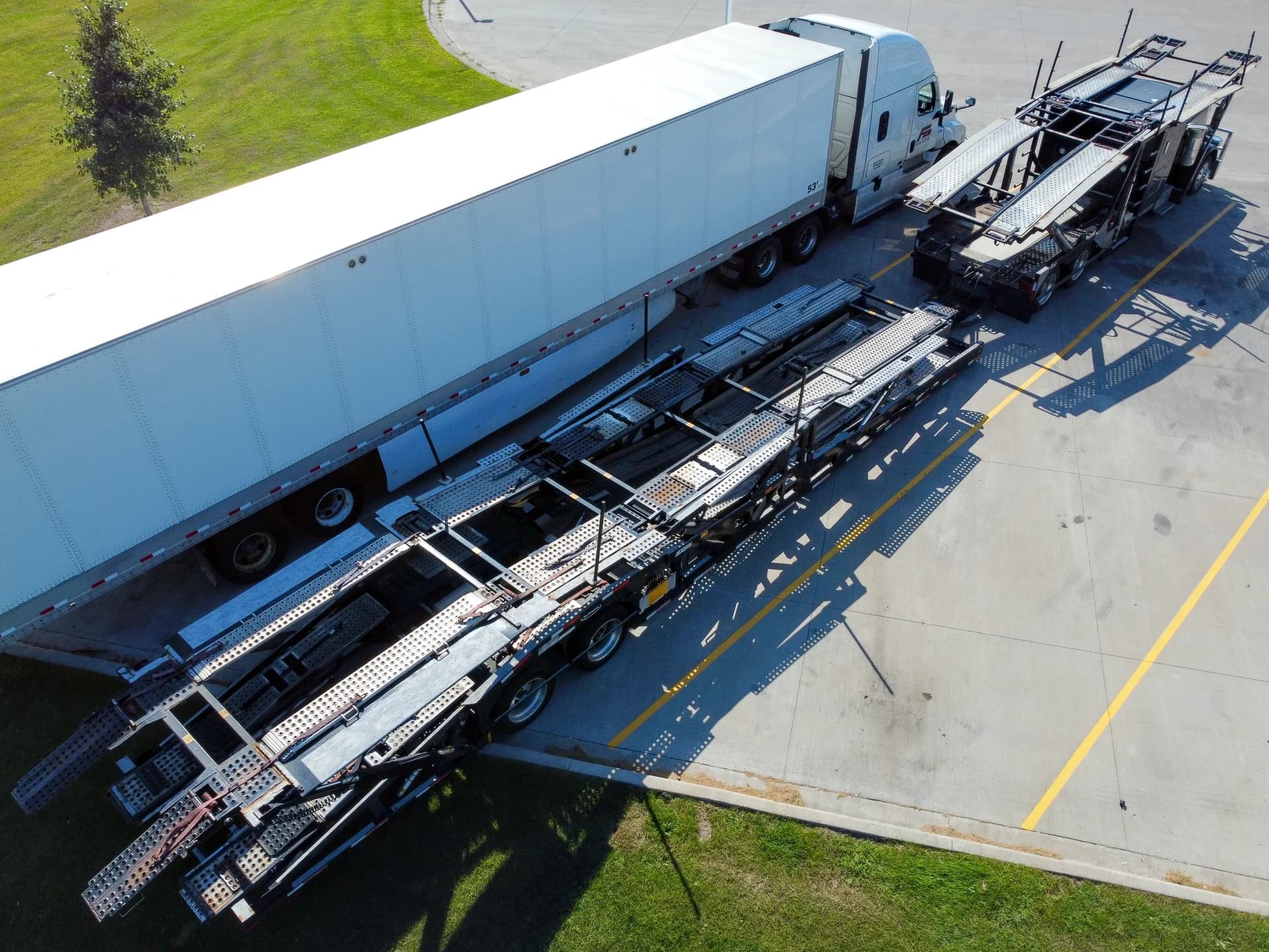
The EH Holden had sat under a tree outside Dubbo for a decade. The buyer came up from Sydney with an open single-axle trailer that looked long enough in the driveway. The car’s wet weight, a steel body full of farm dust, and a 280-kilogram trailer ate the 1,400-kilogram ATM before the wheels were chocked. Then the Newell threw them 40 kilometres of sideways hail. An open car trailer is a honest machine. It is not a shed, and it is not a payload fairy.
Australian car trailers fail in three places: the plate, the weather, and the tie-down pattern. Open versus enclosed is the headline argument. The thesis underneath is simpler. Spec the trailer around the heaviest car you will actually load, the hail and salt that sit on Australian highways, and the GCM of the vehicle that has to drag the lot home.
Weigh the car you have, not the brochure you remember
Kerb mass in a sales brochure is a dry, unladen figure. The car on the trailer has fuel, a battery, tools in the boot, and sometimes a roll-cage or a second set of wheels. A “1,400-kilogram” sedan can be 1,550 kilograms by the time it is winched on. Add the trailer tare and you have the ATM conversation.
Read ATM, GTM and tare on the plate before you fall in love with a pair of aluminium ramps. ATM is the loaded limit of the trailer. GTM is what the axles carry when the coupling is on the ball. Tare is the empty trailer. Payload is the gap, and on a car trailer the car is the payload. If the gap is 1,200 kilograms and the car is 1,400, you do not have a loading technique problem. You have the wrong trailer.
Public weighbridges exist for this. Weigh the car. Weigh the empty trailer. Weigh the combination after a practice load. The numbers on a forum thread about someone else’s Mazda are not a substitute.
Open trailers: the Australian default
An open car trailer is a pair of tracks or a full-width floor, a winch post, ramps, and tie-down points that actually line up with the car’s factory hooks. That is the whole product, and it is enough for a huge amount of Australian work: wreckers, restorers, small dealers, and club racers who trailer to Winton or The Bend.
Specify the following or you will invent them later with a drill.
- Track width that matches the car, with enough adjustment for a narrow classic and a wide modern.
- Ramp length and angle that do not scrape a low splitter on the way up.
- A winch with a genuine rating, a strap that will not saw through a bumper, and a handbrake on the winch.
- Four tie-down points that you can reach without crawling under a hot exhaust.
- A spare wheel that matches the trailer hubs, not a hopeful leftover from a box trailer.
Coupling choice is usually a 50-millimetre ball on these builds. Pintle and gooseneck show up on heavier plant-style transporters, not on a weekend club trailer. Height-match the coupling to the tow vehicle so the trailer sits level. A nose-up EH on the Newell is a sway lesson you do not want.
Enclosed transporters: shelter you pay for in tare
An enclosed car transporter is a box with a door, and every panel is mass. You buy it for hail on the Newell, for stone chips on a Cape trip, for a coastal highway that will salt an open car in a weekend, and for the theft risk of leaving a restored car on an open trailer outside a motel in Dubbo.
You also buy height, a side-wind sail, and a tare that can run 1,200 to 1,800 kilograms before the car goes in. That pushes ATM into serious brake and GCM territory. The same dual-cab that tows an open trailer quite happily can be over GCM the moment the walls go on.
| Layout | Typical tare | What you gain | What you spend |
|---|---|---|---|
| Single-axle open | 280–450 kg | Cheap, low, easy to store | Weather, theft, limited ATM |
| Tandem open | 550–900 kg | Real passenger-car payload | Width, reverse skill, brake spec |
| Tandem enclosed | 1,100–1,800 kg | Hail, salt, overnight security | Height, GCM, side wind, ramp geometry |
| Gooseneck enclosed | 1,600 kg+ | Long cars, better mass on the truck | A tow vehicle that is not a ute |
If you restore cars for a living and you cross state lines, enclosed starts to look like insurance. If you move a track car six times a year and it lives in a shed, open plus a decent cover is the spec that leaves payload on the plate.
Field note: A club racer out of Geelong built a tidy tandem open trailer for a 1,350-kilogram hatch, then added aluminium chequer sides “for the look” and a generator in a front box. The first public weighbridge on the way to Winton put the combination 180 kilograms over ATM. The sides came off. The generator went in the ute. The car still arrived.
Ramps, winches and the cars that will not climb
Australian driveways and paddocks are not a factory floor. A beaver-tail or a long pair of ramps matters more than a winch with a huge sticker. Low cars scrape. Wet grass on a farm at Dubbo turns a two-wheel-drive classic into a sled. A winch is not optional if you recover cars; it is how the car gets on without a second vehicle pushing.
Full-width floors help with cars that do not match the tracks — think a narrow Morris and a wide ute on the same trailer in one year. Tracks save tare and let mud fall through. If you only ever haul one car, tracks are cleaner. If you haul whatever the phone call brings, a floor is more honest.
Wheel chocks and secondary straps stop the car walking on corrugations. Factory tie-down points on modern cars are rated; a rope around a control arm is not. If you cannot see four rated points, do not improvise with a fence strainer.
Brakes, sway and the vehicle in front
Almost every useful car trailer in Australia is over 750 kilograms ATM and therefore needs brakes. Tandem car trailers want electric brakes and a controller the driver understands. Override couplings on a 2.5-tonne ATM tandem are how you discover fade on the Cunninghams Gap descent. Over 2,000 kilograms ATM, fit and test the breakaway. When a trailer needs brakes is the rulebook version of that paragraph.
Sway on a car trailer is usually a loading and coupling-height problem, not a mystery. The car should sit with its mass slightly forward of the trailer axles, the coupling should be level, and tyre pressures should match the load, not the empty ride to the shed. If you still need hardware, read weight-distribution hitches and sway before you buy a gadget that hides a bad load.
Match the trailer to the tow vehicle with GCM in one hand and the car’s wet weight in the other. A 3,500-kilogram tow rating on a dual-cab is not a 3,500-kilogram invitation once the tray is full of tools and the enclosed trailer is on the ball. State pages such as NSW towing guidance and the NHVR mass and dimension material are the public references; the plates on your combination are the private ones.
Lights, reflectors and a plate that remains visible with the ramps up are the rest of the legal picture. Enclosed boxes hide lamps in door frames and collect reversing damage. Spec them as if they will be hit, because they will. Lights, reflectors and number plates is the detail pass.
Buying used, or building once
The used market is full of open trailers that have lived under leaking gearboxes, and enclosed boxes reversed into a beam. Look at hubs, the winch mount, and whether the tracks have been widened with a grinder. New versus used is worth a look before Bathurst. A custom build lets you set track width, winch height and ATM to the cars you own — ask how the chassis is built, and budget the system: trailer, brake controller, spare and straps.
Next step
Weigh the car wet, decide whether hail and theft are real costs in your year, and only then choose open or enclosed. Take those numbers to a builder or a used inspection with questions for trailer manufacturers in your pocket, and do not pay a deposit until the ATM on the quote is larger than the car plus tare plus a margin you can defend at a weighbridge.
Questions readers ask
- Is an enclosed car transporter worth it in Australia?
- It is if hail, theft or a long coastal highway sit in your year. The box adds tare, height and a side-wind sail, so you pay for that shelter with payload and a larger tow vehicle. For a weekend track car that lives in a shed, an open trailer with decent tie-downs is often the honest spec.
- How much ATM do I need to trailer a typical passenger car?
- Start with the car’s kerb mass plus fuel, a spare, and any tools in the boot, then add the trailer’s tare and a margin. Plenty of Australian passenger cars sit between 1,200 and 1,800 kilograms wet. On a tandem open trailer that tares 700 kilograms you are already looking at 2,000 kilograms ATM as a minimum, not a 1,400-kilogram hope.
- Do I need electric brakes on a car trailer?
- If ATM is over 750 kilograms you need brakes; most car trailers are well over that. Electric brakes with a cab controller are the usual choice on tandem car trailers because override couplings get unhappy with that much mass. Over 2,000 kilograms ATM you also need a working breakaway.
- Can I tow a loaded car trailer on a standard car licence?
- A class C licence covers many combinations, but the towing vehicle’s GVM, GCM and the trailer ATM still have to agree, and some heavier combinations push you toward a different class. Check the plates and your state licensing page before you assume the sedan that tows a box trailer can tow a race car.