Coupling types: 50 mm ball, pintle and gooseneck
ADR 62 treats a coupling as a rated, lockable mechanical connection. The 50 mm ball is the Australian light-trailer default. Pintle and gooseneck exist when rating, articulation or deck layout run out.
By Jordan Voss · 25 March 2025 · Updated 16 June 2026 · 6 min read · 1,415 words
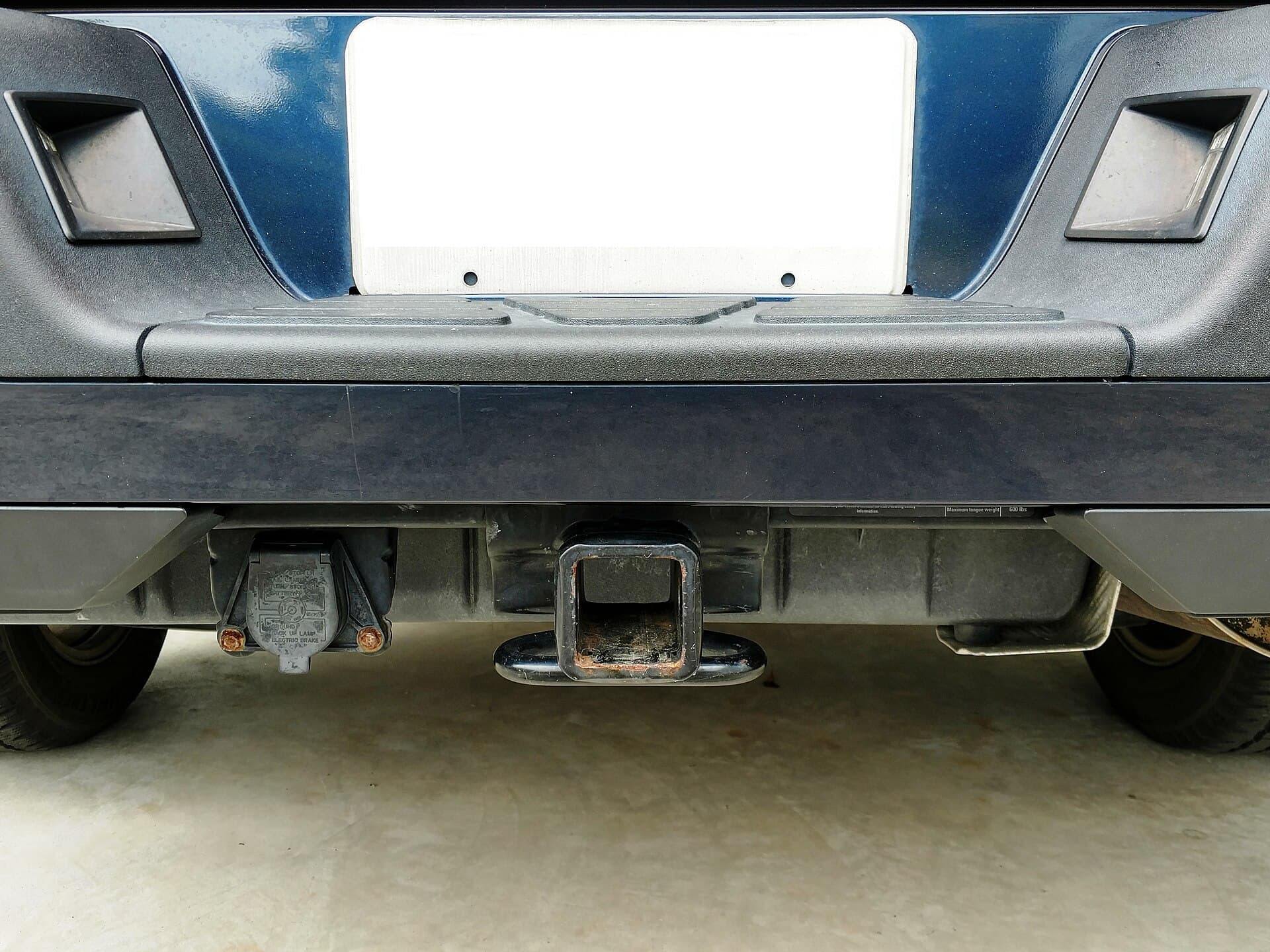
A plant yard on the edge of Toowoomba will teach you more about couplings than a catalogue. The dual-cabs wear 50 mm balls that have been hammered oval. The tag trailers wear override heads with the damper weeping. In the next bay a tractor-spec pintle is hooked through a lunette ring the size of a hand, and a low-loader is waiting on a gooseneck that never comes near a towball. None of those choices is a lifestyle. Each one is a rating, a height and an articulation decision under ADR 62.
This is a workshop guide to the three families Australian custom trailers actually use: the 50 mm ball, the pintle, and gooseneck or fifth-wheel arrangements. It is not legal advice. Confirm ADR 62, VSB 1, AS 4177 and, for heavier combinations, NHVR guidance before you bolt a head on.
The job of a coupling
A coupling has to do four things at once.
It has to carry the ATM you plated — including shock on corrugations, not just static mass on the shed floor. It has to carry the download, typically 8–10 per cent of the laden trailer, without flattening. It has to lock in a way you can see: VSB 1 wants a positive lock and a separate automatic retainer on light trailers. And it has to articulate enough for the ramps, the farm gate and the boat ramp without unlocking or bending the drawbar.
If it cannot do all four, you have the wrong family, or the right family at the wrong rating. The rest of the combination — GCM, towbar, brakes — still has to match, which is the subject of matching a trailer to your tow vehicle.
The 50 mm ball is the default, not the universe
For trailers at or below 3,500 kg ATM, the Australian default is a 50 mm ball coupling that complies with AS 4177.3. VSB 1 repeats the three ratings: 750 kg, 2,000 kg and 3,500 kg. The head must be permanently marked with the maker, the number 50, and that rating. Many heads also carry a serial or batch mark, and “Do not weld” or “Weld only” if the material cares.
The vehicle side is a 50 mm ball on a towbar that itself meets AS 4177.1, adjustable so the centre of the ball sits between 350 mm and 460 mm from the ground when the vehicle is laden. Trailers should be designed to sit level in that window. A lifted dual-cab with a 50 mm ball at 520 mm is already outside the standard height, even if the stamp on the bar says 3,500 kg.
Override (over-run) couplings are still 50 mm heads. They add a slider and a damper that push the brakes. They inherit the GTM limit in when your trailer needs brakes: override is a 2-tonne-GTM story. Do not buy an override head for a 2.8-tonne plant trailer and call it a coupling upgrade.
Two Australian caveats get people hurt.
The ball is not rated by the trailer alone. NHVR VSG 16 exists because a 50 mm coupling’s D-value assumes a tow vehicle around 5,000 kg GVM and a trailer up to 3,500 kg ATM. Put that same head behind a heavier truck and the dynamic force can exceed the coupling even though each plate looks legal. If a heavy vehicle is towing a light trailer, do the D-value work. Do not assume the camper’s 3,500 kg stamp is enough.
Play is a defect. A flattened ball, a loose trigger, a worn override slider or a receiver that clunks will yaw the trailer. That yaw is the start of the sway story in weight-distribution hitches. Replace the worn part. Do not add a friction bar on top of a loose ball.
Off-road “articulated” 50 mm-class couplings exist because a standard cup binds on a Cape York track. If you fit one, ask for the component type approval number. Looking tough is not a standard.
Pintle hooks: articulation and a different wear pattern
A pintle is a hook. The trailer wears a lunette ring. The pair is common on plant, farm, defence-style and some heavy light trailers because it will articulate in ways that make a ball cup complain, and because the hardware can be built to a D-value that a 50 mm head cannot honestly claim.
A pintle is not an excuse to mix brands and ratings. The hook, the lunette, the drawbar attachment and the vehicle mounting all need to be a rated set. A farm hook welded to a light towbar, wearing a ring that came off a different trailer, is how lunettes egg-out and hooks open.
Noise and wear are the pintle tax. The ring slaps. Grease and a correctly sized buffer help; so does not towing at 110 km/h on the Hume with a worn hook. Pintles also change height and download geometry. You cannot drop a weight-distribution head onto a pintle and expect camper-van behaviour.
Use a pintle when the work is plant or farm, when the trailer must leave the ball’s comfort zone, or when the combination’s mass and D-value have left AS 4177 behind. Do not use one on a 750 kg box trailer because it looks like a worksite.
Gooseneck and fifth-wheel: moving the coupling forward
A pig trailer puts the coupling at the end of a drawbar and a large share of the mass on its own axles. A gooseneck or fifth-wheel moves the connection over, or forward of, the tow vehicle’s rear axle. Download becomes a tray or chassis load instead of a ball load on the bumper. The deck can be lower. The combination can be shorter for a given deck. This is why plant and machinery and some horse and livestock combinations leave the 50 mm world.
A fifth-wheel is a plate and a kingpin. A gooseneck is often a large ball or a hook in the tray with a long A-frame from the trailer. They are not interchangeable hardware. They are the same idea: get the connection off the rear bumper.
They also change everything else. The vehicle needs a rated mounting in the tray or on the chassis, not a piece of RHS across the tub. Rear-axle and GCM ratings still apply; you have not found free mass. Lighting and brake leads get longer and more abused. Reverse requires practice. Registration and, above 4.5 tonnes ATM, NHVR access become part of the design. A backyard gooseneck on a one-tonne ute is not a clever 50 mm alternative. It is an unrated modification.
Chains, locks and the things that are not the coupling
Safety chains are required in addition to the coupling. VSB 1 sets ratings and attachment rules by ATM. They must be long enough to allow articulation and short enough not to drag. They are not a breakaway brake. They will not apply the drums if a 2.2-tonne trailer comes off; that is a different device.
A padlock through a trigger is not the automatic retainer ADR 62 is talking about. The head has to keep itself locked. The padlock is theft.
A cushion hitch, a WDH head or a recovery damper is not a coupling rating. Each one sits on top of a ball or a pin that still has to be legal.
Grease the ball. Keep the trigger free of road film. Inspect the weld or the bolt pattern at the drawbar after the first corrugated road, not after the head is already walking. Coupling maintenance belongs on the yearly service schedule with the bearings.
Specify the head with the chassis
Ask the builder which ADR 62 path they are using, what the head is marked, what the ball height will be on your vehicle, and whether override is even eligible at the GTM they are plating. Those questions sit naturally in questions for trailer manufacturers. If the trailer is still a design brief, put the coupling in the specification next to ATM, not in a parts list at the end.
This is not legal advice. Confirm ADR 62, VSB 1, AS 4177 and any NHVR coupling guide before you specify, weld or swap a head.
Once the connection is honest, the combination still has to be kept that way through salt, corrugations and a year of use. The next useful page is the towing hub for the rest of the on-road pieces, or a yearly trailer service schedule if you already know what you are towing.
Questions readers ask
- What do the marks on a 50 mm trailer coupling mean?
- Under AS 4177.3 the head should show “50”, a rating of 750 kg, 2,000 kg or 3,500 kg, and the manufacturer’s mark. If those stamps are missing, treat the coupling as unproven and do not assume the ATM of the trailer.
- When should I use a pintle hook instead of a ball?
- When you need more articulation than a ball likes — plant, farm, off-road — or when the combination’s D-value or ATM is pushing past what a 50 mm ball and a 5-tonne tow vehicle assumption can honestly support. The pintle and lunette have to be a rated pair.
- Is a gooseneck the same as a fifth-wheel?
- They are related, not identical. Both put the coupling over or forward of the tow-vehicle rear axle and unload the ball. A fifth-wheel uses a kingpin and plate. A gooseneck often uses a specialised ball or hook in the tray. Both are layout and rating decisions, not chrome.
- Do I still need safety chains with a rated coupling?
- Yes. Chains are a separate requirement. They are not a breakaway brake and they are not optional because the head has a trigger lock.
- Is this legal advice?
- No. Confirm ADR 62, VSB 1, AS 4177 and any NHVR guidance before you specify or swap a coupling.